Save up to 40% on
parcel forwarding
from USA to Bangladesh

Types of Parcel Forwarding: Personal, Commercial, and Package Consolidation
Parcel forwarding has become an essential tool for anyone who wants to shop internationally, whether that means an individual buying a single item from a US retailer or a business shipping inventory in bulk. If you are new to the concept, our pillar guide on what parcel forwarding is covers the basics of how the process works from start to finish.
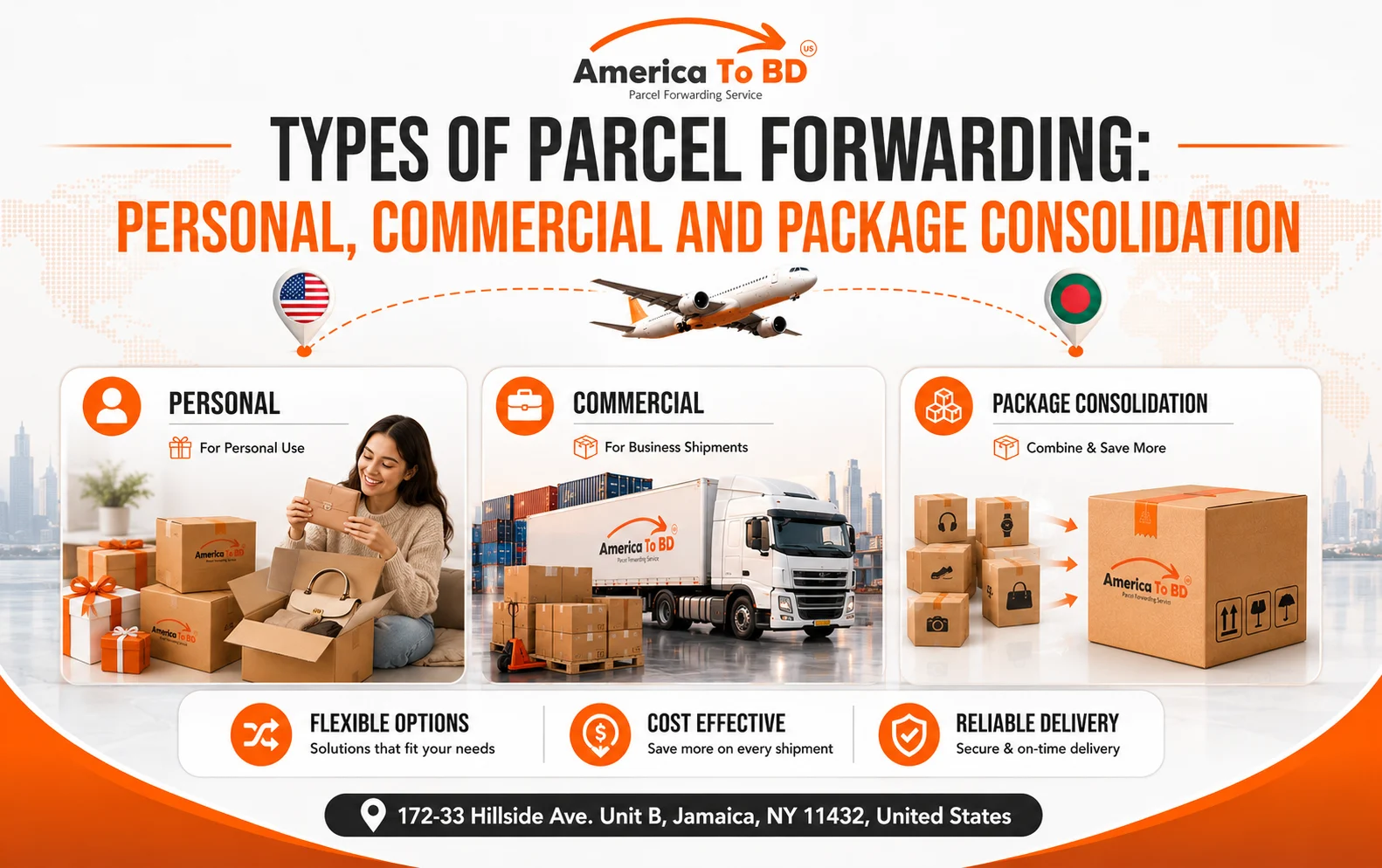
This article goes a step further and focuses on something just as important: not all parcel forwarding is the same. Understanding the different types of personal, commercial, and package consolidation helps you choose a shipping solution that actually fits how you shop, how often you ship, and how much you are shipping.
What Are the Types of Parcel Forwarding?
Parcel forwarding services generally fall into three broad categories:
Personal parcel forwarding for individual shoppers, families, and one-off or occasional shipments.
Commercial parcel forwarding for businesses shipping inventory, bulk orders, or fulfilling ecommerce sales internationally.
Package consolidation a service (often layered on top of personal or commercial forwarding) that combines multiple packages into a single shipment to reduce overall shipping costs.
These categories are not always mutually exclusive. A small e-commerce seller, for example, might use commercial forwarding and consolidation together. Let's look at each in detail.
Personal Parcel Forwarding
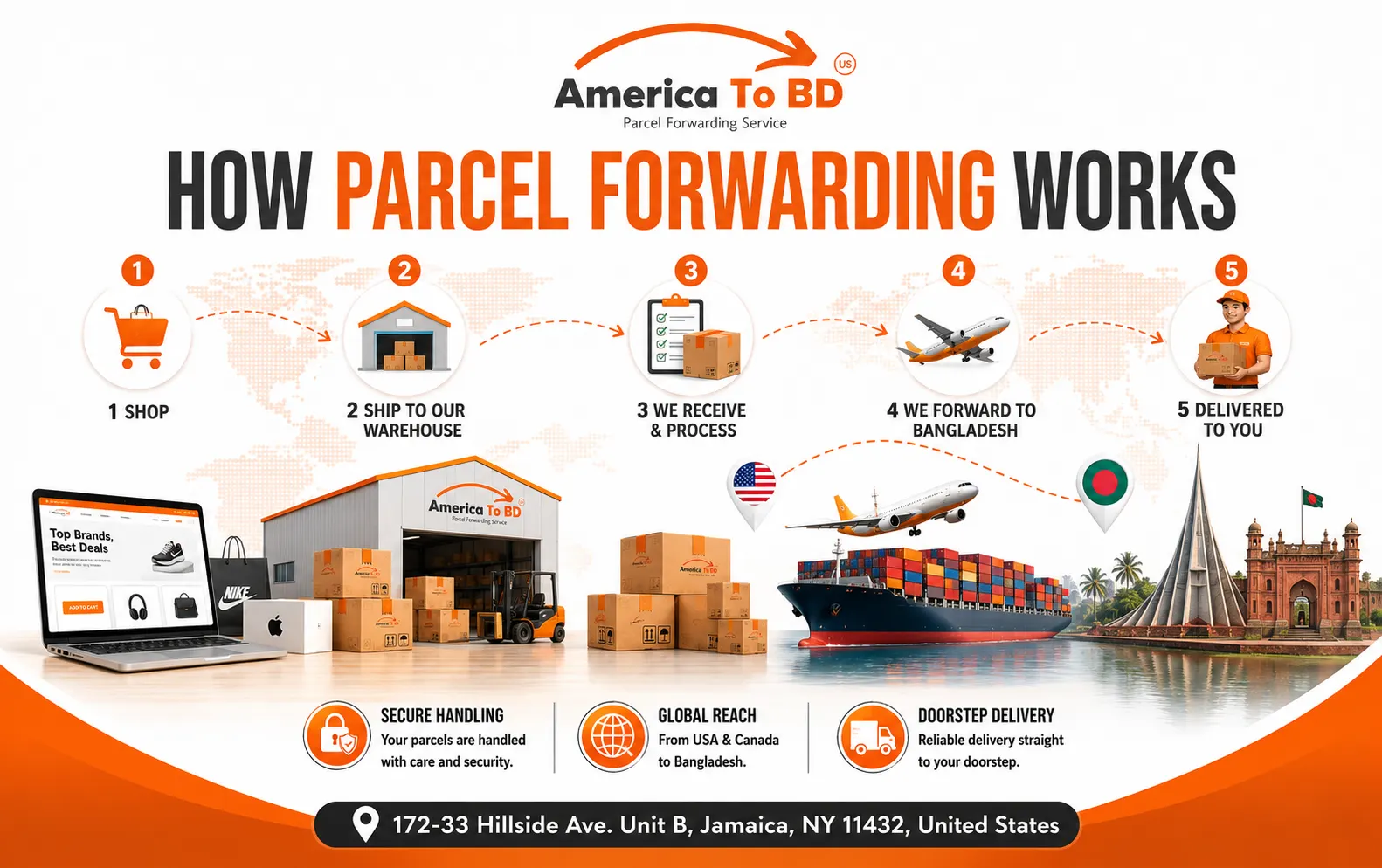
Personal parcel forwarding is designed for individual customers who want to shop from retailers that do not ship to their country. The service provides a shipping address in the retailer's country, such as a US address that receives packages on the customer's behalf, and forwards them internationally.
How It Works
A customer signs up for a personal forwarding account and receives a unique warehouse address. They use that address when checking out with US retailers. Once the package arrives at the warehouse, the forwarding company inspects it, logs it into the customer's account, and prepares it for international shipment based on the customer's instructions.
Who Uses It
Online shoppers buying from US-only retailers
People sending gifts to family members abroad
Families receiving personal belongings from relatives in the US
Occasional shoppers who do not ship frequently enough to need a business account
Benefits and Limitations
Personal forwarding is simple to set up and typically requires no minimum shipment volume, making it accessible for one-off purchases. The main limitation is that, without consolidation, shipping single items one at a time can be less cost-efficient than combining multiple purchases into a single shipment.
Best use case: an individual buying a phone, a pair of shoes, or a birthday gift from a US store and shipping it home to Bangladesh.
Commercial Parcel Forwarding
Commercial parcel forwarding serves businesses rather than individual shoppers. It is built around higher shipment volumes, recurring orders, and the operational needs of running a business that sources or sells across borders.
How Businesses Use It
Small businesses and e-commerce sellers use commercial forwarding to import inventory from US suppliers, fulfill customer orders internationally, or manage stock across multiple sales channels. Instead of a single package, a business account often handles regular, repeating shipments as part of ongoing inventory management.
E-commerce sellers restocking products from US-based suppliers
Businesses importing samples or bulk inventory for resale
Companies managing recurring international shipments as part of their supply chain
Benefits and Challenges
Because commercial shipments tend to be larger and more frequent, businesses can often negotiate more favorable shipping rates and benefit more from consolidation than an individual shopper would. The tradeoff is added complexity: businesses need to account for customs documentation for commercial goods, accurate inventory tracking, and cash-flow planning around shipping and duty costs, which can be harder to predict at scale than for a single personal parcel.
Best use case: a small business regularly importing product samples or inventory from the US to sell in Bangladesh.
Package Consolidation
Package consolidation is the process of combining multiple packages, often from different retailers, into a single shipment before it is sent internationally. It is one of the most effective ways to reduce the overall cost of shipping from the USA.
How Consolidation Works
Packages from different orders arrive at the forwarding company's warehouse over a period of time.
Each package is received, inspected, and logged into the customer's account.
Once the customer is ready, they request consolidation of the packages they want shipped together.
The warehouse team repacks the items into a single, more space-efficient box, removing excess retailer packaging where possible.
The consolidated shipment is then sent as one package, with one shipping cost, one customs declaration, and one tracking number.
This is especially useful for customers who regularly shop from multiple US retailers, since it avoids paying separate international shipping charges for each individual order. For example, someone who buys clothing from one store, electronics accessories from another, and skincare products from a third can have all three combined into a single shipment rather than three separate international parcels.
Comparison Table: Personal vs. Commercial vs. Consolidation
Which Type of Parcel Forwarding Is Right for You?
The best option depends on how you shop and how often you ship. As a general guide:
Individual shoppers making a single purchase: personal parcel forwarding is usually sufficient.
Families receiving occasional gifts or belongings: personal forwarding works well, with consolidation as an option if multiple items are involved.
Students shopping for personal items while abroad: personal forwarding, often combined with consolidation to save on shipping.
Small businesses sourcing inventory: commercial forwarding, since it is built around recurring, higher-volume shipments.
E-commerce sellers fulfilling international orders: commercial forwarding, often paired with consolidation for supplier orders.
Frequent shoppers buying from multiple US retailers: package consolidation, to avoid paying for several separate international shipments.
How America To BD USA Helps
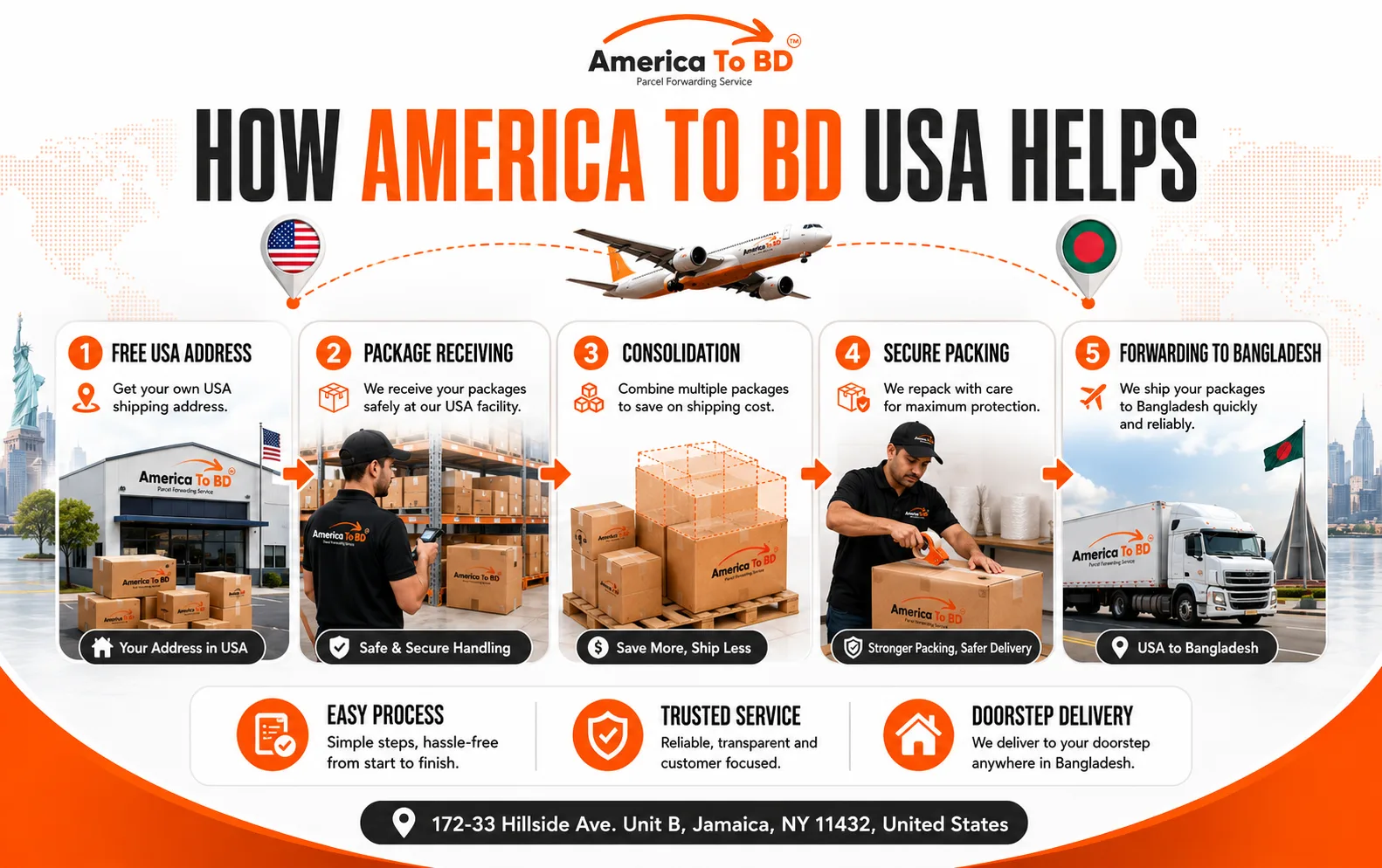
America To BD USA supports both personal and multi-purchase shipping needs for the USA-to-Bangladesh corridor. Customers get a dedicated US warehouse address to receive packages from American retailers, along with package consolidation to combine multiple purchases into a single, more cost-effective shipment.
For shoppers who prefer not to manage US retailer checkouts and payments directly, the Purchase & Forward service allows America To BD USA to buy an item on the customer's behalf before forwarding it. Every shipment is trackable from receiving through final delivery, and the site's pricing calculator allows customers to estimate costs before committing to a shipment, supporting the kind of transparent planning that both personal and higher-volume shippers benefit from.
Common Mistakes to Avoid
Choosing the Wrong Forwarding Type
Using personal forwarding for frequent, high-volume shopping (or vice versa) can lead to unnecessary costs or unnecessary complexity. Match the service type to your actual shipping pattern.
Ignoring Consolidation Opportunities
Shipping each purchase separately when several packages could be combined is one of the most common ways shoppers overpay for international shipping.
Incorrect Shipping Information
An incomplete or inaccurate recipient address, especially for Bangladesh's address formats, can delay delivery. Always double-check address details before submitting a shipping request.
Shipping Restricted Items
Every destination country restricts certain goods. Check applicable restricted and prohibited item guidance before forwarding anything unusual, such as batteries, liquids, or specialty electronics.
Underestimating Shipping Costs
Weight, dimensional weight, shipping method, and destination country duties all affect the final cost. Use a pricing calculator or request an estimate before finalizing a shipment to avoid surprises.
Conclusion
Personal parcel forwarding, commercial parcel forwarding, and package consolidation each solve a different shipping problem. Personal forwarding suits individual purchases and gifts, commercial forwarding is built for business-scale shipping, and consolidation helps anyone shopping from multiple retailers save on international shipping costs. Understanding which one fits your situation is the first step toward a smoother, more cost-effective shipping experience.